

Skip to content
  • ramatomachines@gmail.com
Logo 1 -Ramato
Youtube Facebook-f Instagram
Logo 1 -Ramato
  • HOME
  • About us
  • Products
    • DRILLING MACHINE
    • WELDING MACHINE
    • BELT GRINDER
    • CUTTING MACHINE
    • COIL WINDING MACHINE
    • SERIES OF MOTORS
    • BENDING MACHINE
    • SHEARING MACHINE
    • BENCH GRINDER
    • BENCH POLISHER
    • SLOTTING MACHINE
    • AIR COMPRESSOR
    • BLOWERS
    • PUMPS
    • LATHE MACHINE
    • PRESS
    • ELECTRO PLATING RECTIFIER
    • HYDRAULIC TOOLS
    • MACHINE ACCESSORIES
    • BATHWARES
    • SANITARYWARE
    • CERAMIC TILES
    • TOYS
    • KITCHEN SINKS
  • DEALER NETWORK
  • Contact Us
  • HOME
  • About us
  • Products
    DRILLING MACHINE
    WELDING MACHINE
    BELT GRINDER
    CUTTING MACHINE
    COIL WINDING MACHINE
    SERIES OF MOTORS
    BENCH GRINDER
    BENCH POLISHER
    BENDING MACHINE
    SHEARING MACHINE
    SLOTTING MACHINE
    MACHINE ACCESSORIES
    AIR COMPRESSOR
    BLOWERS
    PUMPS
    AUTOMATION
    LATHE MACHINE
    PRESS
    ELECTRO PLATING RECTIFIER
    HYDRAULIC TOOLS
    MACHINERY
    POWER TOOLS
    CERAMIC TILES
    BATHWARES
    SANITARYWARE
    KITCHEN SINKS
    POLY PLAST
    TOYS
  • Dealer Network
  • Contact Us
whatsappicon

+ 91 9016903132

QUICK CALL

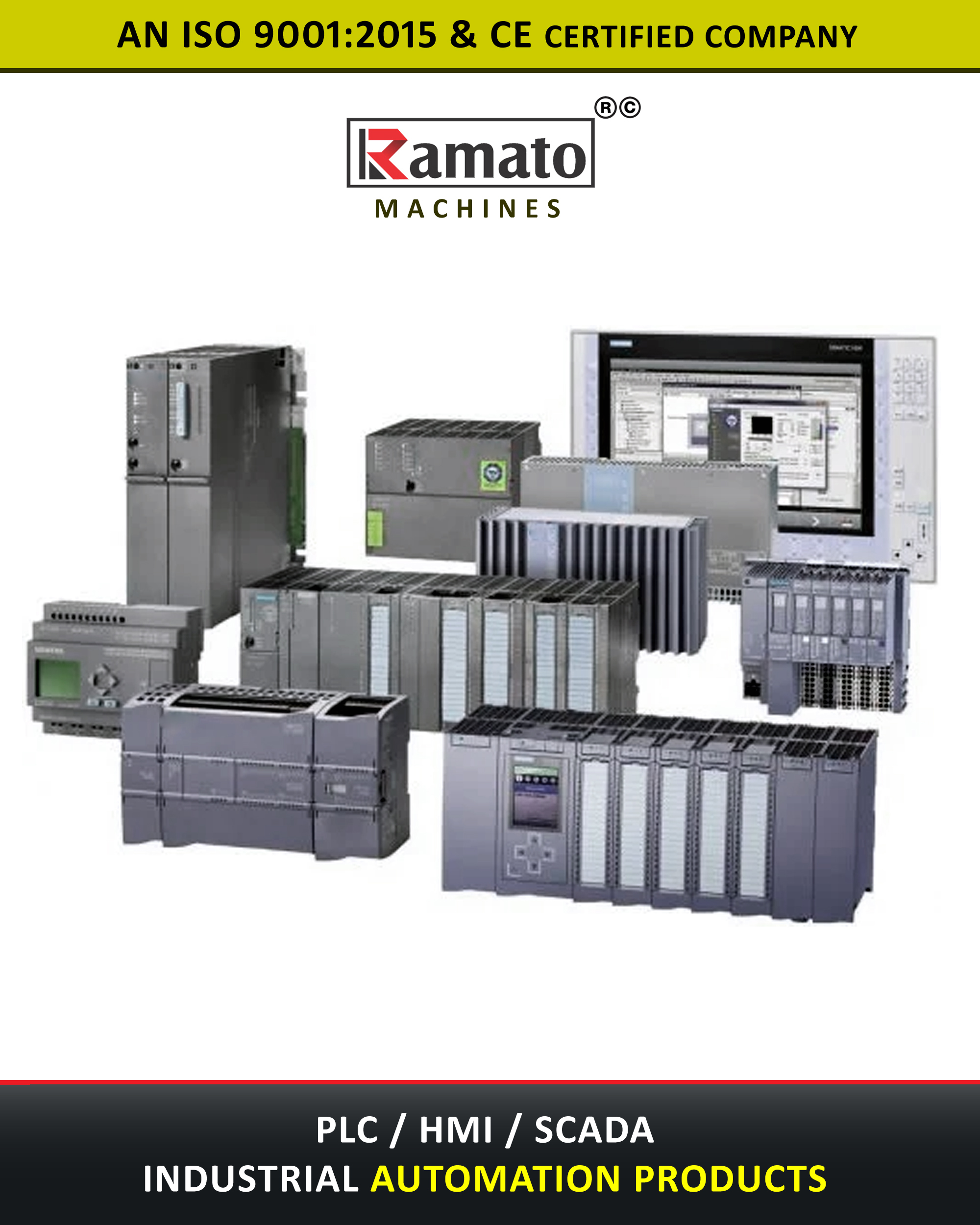
PLC / HMI / SCADA

PLC HMI SCADA Manufacturer Exporter india

PLC / HMI / SCADA

PLC (Programmable Logic Controller), HMI (Human-Machine Interface), and SCADA (Supervisory Control and Data Acquisition) systems are integral components of industrial automation and control systems.

Programmable Logic Controller (PLC):

A PLC is a specialized industrial computer used to control machinery and processes in manufacturing plants, industrial facilities, and other automation applications. It is programmable and operates based on inputs from sensors and other devices, executing logic-based control algorithms to regulate outputs such as motors, valves, and actuators.

Human-Machine Interface (HMI):

An HMI is a graphical interface that allows operators to interact with and monitor industrial control systems. It provides a visual representation of the process or equipment being controlled, along with tools for data visualization, alarm management, and control.

Supervisory Control and Data Acquisition (SCADA):

SCADA systems are centralized control systems used to monitor, control, and manage industrial processes and infrastructure across large-scale operations. They integrate data acquisition, visualization, and control functions to provide operators with comprehensive oversight and control of complex systems.

Features
Applications
Features

Programmable Logic Controller (PLC):

  • Robustness: PLCs are designed to operate reliably in harsh industrial environments, with resistance to temperature extremes, vibration, and electrical noise.
  • Modularity: PLCs often feature modular designs, allowing for easy expansion and customization to accommodate changing control requirements.
  • Real-time Operation: PLCs execute control logic in real-time, ensuring precise and timely responses to input signals and maintaining process integrity.
  • Diverse Input/Output Support: PLCs support various types of input/output modules, including digital inputs/outputs (DI/DO), analog inputs/outputs (AI/AO), and specialty modules for communication and control.
  • Programming Flexibility: PLC programming languages such as ladder logic, function block diagrams (FBD), and structured text (ST) provide flexibility for implementing control strategies and algorithms.
  • Remote Monitoring and Diagnostics: Many PLCs support remote monitoring and diagnostics through network connections, enabling operators to monitor system status and troubleshoot issues from remote locations.

Human-Machine Interface (HMI):

  • Graphical Representation: HMIs display process data, control parameters, and equipment status using graphical elements such as icons, gauges, and trend charts for easy interpretation by operators.
  • User-Friendly Interface: HMIs feature intuitive user interfaces with touchscreens, buttons, and menus that simplify operation and navigation.
  • Alarm Management: HMIs alert operators to abnormal conditions or equipment malfunctions through visual and audible alarms, enabling prompt response and troubleshooting.
  • Data Logging and Trending: HMIs record process data over time and display trends, allowing operators to analyze historical performance and identify patterns or anomalies.
  • Remote Access: Many HMIs support remote access via network connections, enabling operators to monitor and control processes from remote locations using web-based or mobile applications.
  • Integration with PLCs and SCADA: HMIs interface with PLCs and SCADA systems to exchange data and commands, providing a unified interface for controlling and monitoring industrial processes.

Supervisory Control and Data Acquisition (SCADA):

  • Real-Time Monitoring: SCADA systems collect and display real-time data from sensors, PLCs, and other devices across distributed locations, providing operators with up-to-date information on process conditions and equipment status.
  • Remote Control: SCADA systems allow operators to remotely control industrial processes and equipment from a centralized location using HMIs or web-based interfaces, enabling efficient management of geographically dispersed assets.
  • Historical Data Logging: SCADA systems archive historical data on process parameters, equipment performance, and production metrics, facilitating analysis, reporting, and decision-making.
  • Alarm Management and Notification: SCADA systems generate alarms for abnormal conditions, equipment failures, and safety hazards, and notify operators through visual and audible alerts, ensuring timely response and intervention.
  • Trend Analysis and Reporting: SCADA systems analyze historical data trends, generate reports, and provide insights into process performance, enabling operators to identify opportunities for optimization and improvement.
  • Security and Redundancy: SCADA systems implement robust security measures such as user authentication, access controls, and encryption to protect against cyber threats and ensure data integrity. They also incorporate redundancy features for fault tolerance and system resilience.
Applications

Programmable Logic Controller (PLC):

  • Manufacturing Automation: PLCs are widely used in manufacturing processes for controlling assembly lines, conveyor systems, robotics, and material handling equipment.
  • Process Control: PLCs regulate industrial processes such as chemical production, water treatment, and power generation by monitoring and controlling parameters such as temperature, pressure, and flow rate.
  • Building Automation: PLCs control heating, ventilation, air conditioning (HVAC), lighting, and security systems in commercial and residential buildings to optimize energy efficiency and occupant comfort.
  • Utilities: PLCs are employed in utility systems for monitoring and controlling water distribution, wastewater treatment, electrical power distribution, and renewable energy generation.
  • Transportation: PLCs manage traffic signals, railway signaling systems, and automated guided vehicles (AGVs) in transportation infrastructure to ensure safe and efficient operation.

Human-Machine Interface (HMI):

  • Process Visualization: HMIs provide operators with real-time visualization of industrial processes, equipment status, and production metrics in manufacturing plants, refineries, and utilities.
  • Control Panel Interfaces: HMIs serve as interfaces for control panels and operator consoles in machinery, equipment, and control rooms, allowing operators to monitor and control operations locally.
  • Alarm Management Systems: HMIs display and manage alarms generated by PLCs and SCADA systems, helping operators respond promptly to abnormal conditions and equipment failures.
  • Data Acquisition and Analysis: HMIs collect and display data from sensors, PLCs, and other devices, allowing operators to analyze trends, identify inefficiencies, and optimize processes.
  • Remote Monitoring and Control: HMIs enable remote monitoring and control of industrial processes and equipment via web-based interfaces or mobile applications, enhancing flexibility and accessibility for operators.

Supervisory Control and Data Acquisition (SCADA):

  • Power Generation and Distribution: SCADA systems monitor and control electrical power generation plants, transmission grids, and distribution networks to ensure reliable and efficient operation.
  • Oil and Gas Production: SCADA systems manage oil and gas production facilities, pipelines, and refineries, optimizing production processes, and ensuring safety and compliance.
  • Water and Wastewater Management: SCADA systems oversee water treatment plants, wastewater collection systems, and distribution networks, ensuring water quality, availability, and regulatory compliance.
  • Transportation Infrastructure: SCADA systems control traffic signals, railway signaling systems, and toll collection systems in transportation infrastructure, optimizing traffic flow and safety.
  • Manufacturing and Process Industries: SCADA systems monitor and control manufacturing processes, assembly lines, and industrial facilities in various industries, optimizing production efficiency and quality.

Overall, PLCs, HMIs, and SCADA systems are essential components of industrial automation and control systems, providing operators with the tools and capabilities needed to monitor, control, and optimize industrial processes and infrastructure.

Features

Programmable Logic Controller (PLC):

  • Robustness: PLCs are designed to operate reliably in harsh industrial environments, with resistance to temperature extremes, vibration, and electrical noise.
  • Modularity: PLCs often feature modular designs, allowing for easy expansion and customization to accommodate changing control requirements.
  • Real-time Operation: PLCs execute control logic in real-time, ensuring precise and timely responses to input signals and maintaining process integrity.
  • Diverse Input/Output Support: PLCs support various types of input/output modules, including digital inputs/outputs (DI/DO), analog inputs/outputs (AI/AO), and specialty modules for communication and control.
  • Programming Flexibility: PLC programming languages such as ladder logic, function block diagrams (FBD), and structured text (ST) provide flexibility for implementing control strategies and algorithms.
  • Remote Monitoring and Diagnostics: Many PLCs support remote monitoring and diagnostics through network connections, enabling operators to monitor system status and troubleshoot issues from remote locations.

Human-Machine Interface (HMI):

  • Graphical Representation: HMIs display process data, control parameters, and equipment status using graphical elements such as icons, gauges, and trend charts for easy interpretation by operators.
  • User-Friendly Interface: HMIs feature intuitive user interfaces with touchscreens, buttons, and menus that simplify operation and navigation.
  • Alarm Management: HMIs alert operators to abnormal conditions or equipment malfunctions through visual and audible alarms, enabling prompt response and troubleshooting.
  • Data Logging and Trending: HMIs record process data over time and display trends, allowing operators to analyze historical performance and identify patterns or anomalies.
  • Remote Access: Many HMIs support remote access via network connections, enabling operators to monitor and control processes from remote locations using web-based or mobile applications.
  • Integration with PLCs and SCADA: HMIs interface with PLCs and SCADA systems to exchange data and commands, providing a unified interface for controlling and monitoring industrial processes.

Supervisory Control and Data Acquisition (SCADA):

  • Real-Time Monitoring: SCADA systems collect and display real-time data from sensors, PLCs, and other devices across distributed locations, providing operators with up-to-date information on process conditions and equipment status.
  • Remote Control: SCADA systems allow operators to remotely control industrial processes and equipment from a centralized location using HMIs or web-based interfaces, enabling efficient management of geographically dispersed assets.
  • Historical Data Logging: SCADA systems archive historical data on process parameters, equipment performance, and production metrics, facilitating analysis, reporting, and decision-making.
  • Alarm Management and Notification: SCADA systems generate alarms for abnormal conditions, equipment failures, and safety hazards, and notify operators through visual and audible alerts, ensuring timely response and intervention.
  • Trend Analysis and Reporting: SCADA systems analyze historical data trends, generate reports, and provide insights into process performance, enabling operators to identify opportunities for optimization and improvement.
  • Security and Redundancy: SCADA systems implement robust security measures such as user authentication, access controls, and encryption to protect against cyber threats and ensure data integrity. They also incorporate redundancy features for fault tolerance and system resilience.

Applications

Programmable Logic Controller (PLC):

  • Manufacturing Automation: PLCs are widely used in manufacturing processes for controlling assembly lines, conveyor systems, robotics, and material handling equipment.
  • Process Control: PLCs regulate industrial processes such as chemical production, water treatment, and power generation by monitoring and controlling parameters such as temperature, pressure, and flow rate.
  • Building Automation: PLCs control heating, ventilation, air conditioning (HVAC), lighting, and security systems in commercial and residential buildings to optimize energy efficiency and occupant comfort.
  • Utilities: PLCs are employed in utility systems for monitoring and controlling water distribution, wastewater treatment, electrical power distribution, and renewable energy generation.
  • Transportation: PLCs manage traffic signals, railway signaling systems, and automated guided vehicles (AGVs) in transportation infrastructure to ensure safe and efficient operation.

Human-Machine Interface (HMI):

  • Process Visualization: HMIs provide operators with real-time visualization of industrial processes, equipment status, and production metrics in manufacturing plants, refineries, and utilities.
  • Control Panel Interfaces: HMIs serve as interfaces for control panels and operator consoles in machinery, equipment, and control rooms, allowing operators to monitor and control operations locally.
  • Alarm Management Systems: HMIs display and manage alarms generated by PLCs and SCADA systems, helping operators respond promptly to abnormal conditions and equipment failures.
  • Data Acquisition and Analysis: HMIs collect and display data from sensors, PLCs, and other devices, allowing operators to analyze trends, identify inefficiencies, and optimize processes.
  • Remote Monitoring and Control: HMIs enable remote monitoring and control of industrial processes and equipment via web-based interfaces or mobile applications, enhancing flexibility and accessibility for operators.

Supervisory Control and Data Acquisition (SCADA):

  • Power Generation and Distribution: SCADA systems monitor and control electrical power generation plants, transmission grids, and distribution networks to ensure reliable and efficient operation.
  • Oil and Gas Production: SCADA systems manage oil and gas production facilities, pipelines, and refineries, optimizing production processes, and ensuring safety and compliance.
  • Water and Wastewater Management: SCADA systems oversee water treatment plants, wastewater collection systems, and distribution networks, ensuring water quality, availability, and regulatory compliance.
  • Transportation Infrastructure: SCADA systems control traffic signals, railway signaling systems, and toll collection systems in transportation infrastructure, optimizing traffic flow and safety.
  • Manufacturing and Process Industries: SCADA systems monitor and control manufacturing processes, assembly lines, and industrial facilities in various industries, optimizing production efficiency and quality.

Overall, PLCs, HMIs, and SCADA systems are essential components of industrial automation and control systems, providing operators with the tools and capabilities needed to monitor, control, and optimize industrial processes and infrastructure.

  • Ramato Factory Tour

Specifications

Electrical Catalogue

Explore Ramato premium electrical tools and equipment, designed for reliable performance and long-lasting durability.

Read More

Drill Catalogue

Explore our full range of high-performance drills designed for precision, power, and long-lasting durability.
Read More

Social Media:

Youtube Facebook Instagram

A Newsletter Subscription Products is Available From Us

Logo 1 -Ramato
  • Excellent Products Of Naya BHARAT (INDIA)
  • Leading  Exporter  of  Naya BHARAT (INDIA)

Quick Links

  • HOME
  • About us
  • Products
  • Dealer Network
  • Contact Us
  • HOME
  • About us
  • Products
  • Dealer Network
  • Contact Us
  • HOME
  • About us
  • Products
  • Dealer Network
  • Contact Us
  • HOME
  • About us
  • Products
  • Dealer Network
  • Contact Us

Contact Info

  • ramatomachines@gmail.com
  • + 91 9016903132
  • "Rajlaxmi Estate", Plot No.11, Survey No. 212, Atlas Industrial Area, Near Maldhari Railway Crossing, Gondal Chowkdi, Kothariya, Rajkot-360004, Gujarat, India
Copyright © 2026 Ramato. All rights reserved | Design & Developed By Bitnet Infotech