

QUICK CALL
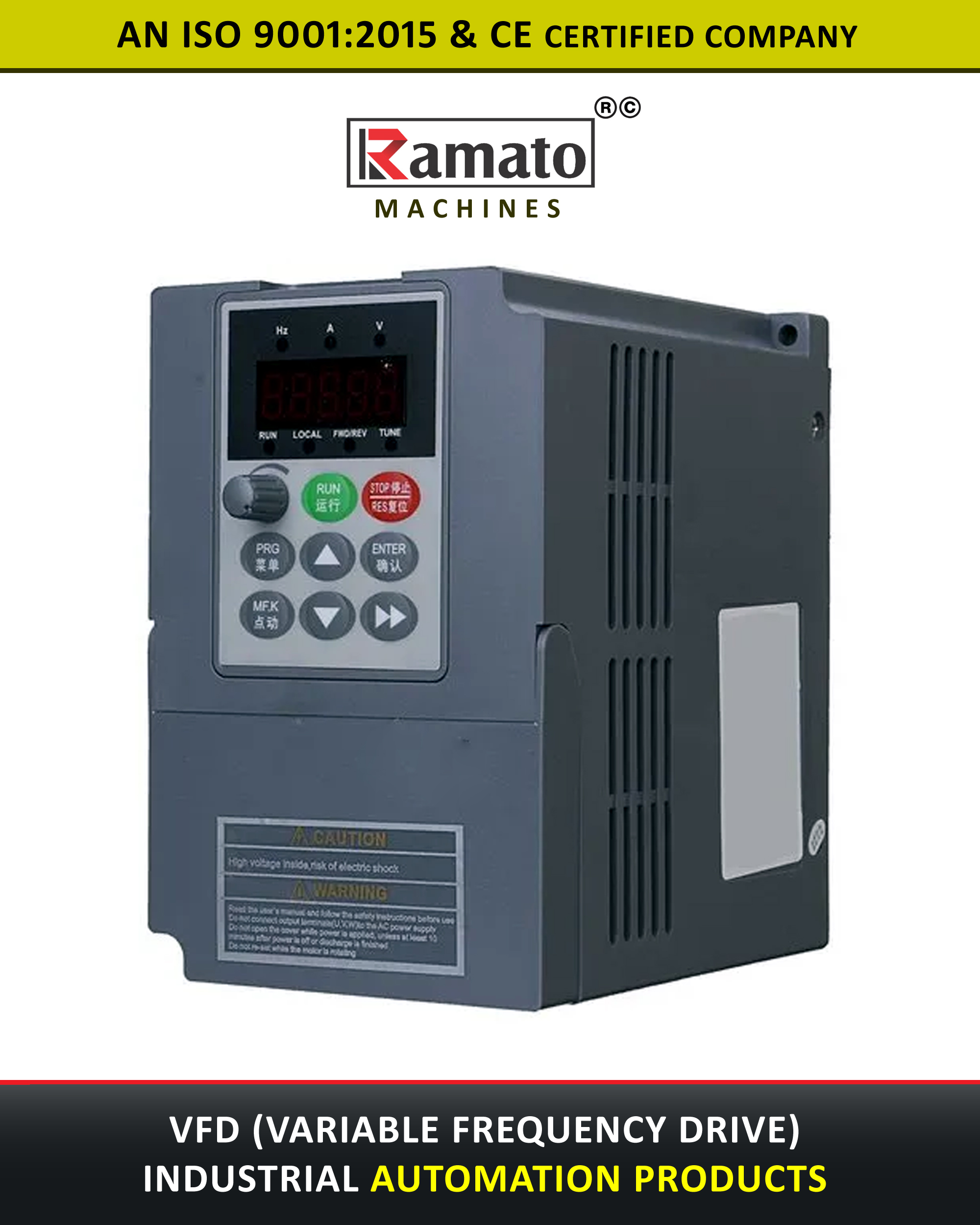
A Ramato Make Variable Frequency Drive (VFD), also known as an adjustable frequency drive or inverter drive, is an electronic device used to control the speed and torque of an AC induction motor by varying the frequency and voltage of the power supplied to the motor. A VFD comprises power electronics and control circuits that convert fixed-frequency AC power from a power source, such as the electrical grid, into variable-frequency AC power to control the speed of AC induction motors. By adjusting the frequency and voltage of the output power, VFDs can regulate the motor’s speed and torque, providing precise control over its operation. Overall, VFDs offer versatile and efficient motor control solutions across a wide range of industries and applications, contributing to energy savings, process optimization, and equipment reliability.
Variable Speed Control: VFDs enable precise control over motor speed by varying the frequency of the electrical power supplied to the motor. This feature allows for energy-efficient operation and optimal performance across a wide range of speeds.
Soft Start and Stop: VFDs offer smooth acceleration and deceleration of motors, reducing mechanical stress and wear on equipment during start-up and shut-down, thus extending the lifespan of the motor and connected machinery.
Energy Efficiency: By adjusting motor speed to match the load requirements, VFDs help optimize energy consumption and reduce operating costs, particularly in applications with varying loads where motors often run at less than full speed.
Dynamic Braking: Some VFDs are equipped with dynamic braking capabilities, allowing them to quickly stop the motor by dissipating the kinetic energy generated during deceleration, enhancing safety and control in applications requiring rapid stopping.
Overload Protection: VFDs typically include built-in protection features such as overcurrent, overvoltage, and overload protection, safeguarding the motor and associated equipment from damage due to electrical faults or excessive loads.
Diagnostic and Monitoring Capabilities: Many VFDs are equipped with diagnostic tools and monitoring features that enable users to track motor performance, detect faults, and troubleshoot issues, enhancing reliability and maintenance efficiency.
Modular Design: VFDs often have a modular design, allowing for easy installation, configuration, and expansion to accommodate changing system requirements or additional motor control needs.
Compatibility with Various Motors: VFDs are compatible with a wide range of AC induction motors, including standard three-phase motors, synchronous motors, and permanent magnet motors, making them versatile for different applications.
Overall, Ramato VFDs offer versatile and efficient motor control solutions across a wide range of industries and applications, contributing to energy savings, process optimization, and equipment reliability.
Features
Variable Speed Control: VFDs enable precise control over motor speed by varying the frequency of the electrical power supplied to the motor. This feature allows for energy-efficient operation and optimal performance across a wide range of speeds.
Soft Start and Stop: VFDs offer smooth acceleration and deceleration of motors, reducing mechanical stress and wear on equipment during start-up and shut-down, thus extending the lifespan of the motor and connected machinery.
Energy Efficiency: By adjusting motor speed to match the load requirements, VFDs help optimize energy consumption and reduce operating costs, particularly in applications with varying loads where motors often run at less than full speed.
Dynamic Braking: Some VFDs are equipped with dynamic braking capabilities, allowing them to quickly stop the motor by dissipating the kinetic energy generated during deceleration, enhancing safety and control in applications requiring rapid stopping.
Overload Protection: VFDs typically include built-in protection features such as overcurrent, overvoltage, and overload protection, safeguarding the motor and associated equipment from damage due to electrical faults or excessive loads.
Diagnostic and Monitoring Capabilities: Many VFDs are equipped with diagnostic tools and monitoring features that enable users to track motor performance, detect faults, and troubleshoot issues, enhancing reliability and maintenance efficiency.
Modular Design: VFDs often have a modular design, allowing for easy installation, configuration, and expansion to accommodate changing system requirements or additional motor control needs.
Compatibility with Various Motors: VFDs are compatible with a wide range of AC induction motors, including standard three-phase motors, synchronous motors, and permanent magnet motors, making them versatile for different applications.
Applications
Overall, Ramato VFDs offer versatile and efficient motor control solutions across a wide range of industries and applications, contributing to energy savings, process optimization, and equipment reliability.