
QUICK CALL
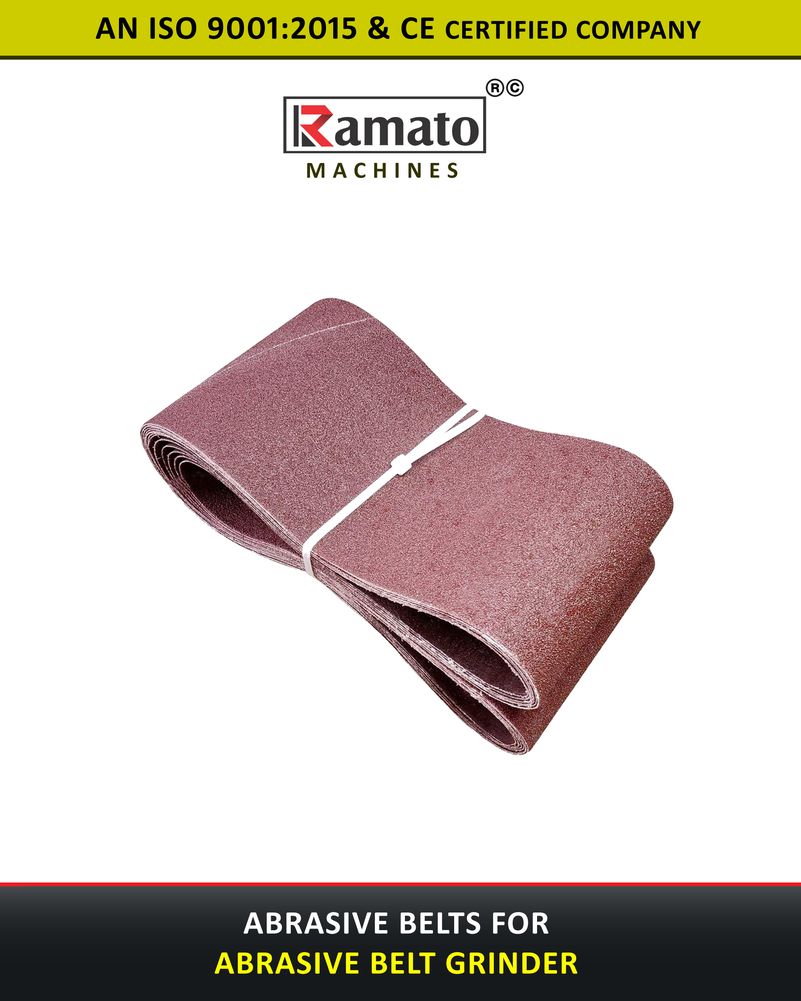
Ramato Made Abrasive belts are essential components used in belt grinding machines for various metalworking and woodworking applications. Abrasive belts consist of a flexible backing material coated with abrasive grains bonded together by resin, glue, or other adhesives. The abrasive grains are evenly distributed across the surface of the belt, allowing for efficient material removal during grinding operations. The backing material can vary in flexibility and strength depending on the application requirements. Ramato is Leading Manufacturer and Exporter of Abrasive Grinding And Polishing Belts From Rajkot Gujarat Bharat (INDIA).
Abrasive Material: Abrasive belts are available in various abrasive materials, including aluminum oxide, silicon carbide, zirconia alumina, and ceramic grains. Each abrasive material offers different cutting characteristics suited to specific workpiece materials and grinding requirements.
Backing Material: The backing material of abrasive belts can be made of cloth, paper, polyester, or a combination of materials. The choice of backing material affects the belt’s flexibility, durability, and resistance to heat and moisture.
Grit Size: Abrasive belts come in different grit sizes, ranging from coarse to fine. Coarser grits are suitable for rapid material removal and shaping, while finer grits produce smoother surface finishes and are used for precision grinding and polishing.
Belt Dimensions: Abrasive belts are available in various dimensions, including width, length, and thickness. The dimensions of the belt determine the grinding area and compatibility with different belt grinding machines.
Joint Type: Abrasive belts may feature different types of joints for connecting the ends of the belt, such as lap joints, butt joints, or overlapping joints. The joint type affects the strength and durability of the belt during grinding operations.
Resin Bonding: The abrasive grains are bonded to the backing material using resin or glue, which provides adhesion and stability during grinding. High-quality resin bonding ensures consistent performance and long-lasting durability of the abrasive belt.
Backing Flexibility: The flexibility of the backing material allows the abrasive belt to conform to the contours of the workpiece, ensuring uniform grinding and preventing uneven wear on the belt.
Metal Grinding and Deburring: Abrasive belts are commonly used for metal grinding and deburring operations, where they remove excess material, sharp edges, and burrs from metal workpieces, such as steel, stainless steel, aluminum, and brass.
Surface Finishing: Abrasive belts are used for surface finishing applications, including blending, smoothing, and polishing metal surfaces to achieve desired surface roughness and cosmetic appearance.
Stock Removal: Abrasive belts are effective for rapid stock removal during heavy-duty grinding operations, such as weld seam removal, material shaping, and dimensioning of metal components.
Woodworking: In woodworking applications, abrasive belts are used for sanding and shaping wooden workpieces, including furniture, cabinets, doors, and flooring. They remove imperfections, smooth surfaces, and prepare wood for finishing.
Knife Sharpening: Abrasive belts are commonly used for sharpening knives, blades, and cutting tools in industrial, culinary, and DIY applications. They restore the cutting edges of blades to their original sharpness and precision.
Automotive and Aerospace: Abrasive belts are widely used in automotive and aerospace industries for grinding, polishing, and finishing metal components, such as engine parts, turbine blades, and aircraft structures.
Maintenance and Repair: Abrasive belts are also used for maintenance and repair tasks, such as rust removal, paint stripping, and surface preparation of metal surfaces in automotive, marine, and construction applications.
In summary, abrasive belts are versatile grinding tools used in a wide range of metalworking and woodworking applications, offering efficient material removal, surface finishing, and precision grinding capabilities.
Features
Abrasive Material: Abrasive belts are available in various abrasive materials, including aluminum oxide, silicon carbide, zirconia alumina, and ceramic grains. Each abrasive material offers different cutting characteristics suited to specific workpiece materials and grinding requirements.
Backing Material: The backing material of abrasive belts can be made of cloth, paper, polyester, or a combination of materials. The choice of backing material affects the belt’s flexibility, durability, and resistance to heat and moisture.
Grit Size: Abrasive belts come in different grit sizes, ranging from coarse to fine. Coarser grits are suitable for rapid material removal and shaping, while finer grits produce smoother surface finishes and are used for precision grinding and polishing.
Belt Dimensions: Abrasive belts are available in various dimensions, including width, length, and thickness. The dimensions of the belt determine the grinding area and compatibility with different belt grinding machines.
Joint Type: Abrasive belts may feature different types of joints for connecting the ends of the belt, such as lap joints, butt joints, or overlapping joints. The joint type affects the strength and durability of the belt during grinding operations.
Resin Bonding: The abrasive grains are bonded to the backing material using resin or glue, which provides adhesion and stability during grinding. High-quality resin bonding ensures consistent performance and long-lasting durability of the abrasive belt.
Backing Flexibility: The flexibility of the backing material allows the abrasive belt to conform to the contours of the workpiece, ensuring uniform grinding and preventing uneven wear on the belt.
Applications
Metal Grinding and Deburring: Abrasive belts are commonly used for metal grinding and deburring operations, where they remove excess material, sharp edges, and burrs from metal workpieces, such as steel, stainless steel, aluminum, and brass.
Surface Finishing: Abrasive belts are used for surface finishing applications, including blending, smoothing, and polishing metal surfaces to achieve desired surface roughness and cosmetic appearance.
Stock Removal: Abrasive belts are effective for rapid stock removal during heavy-duty grinding operations, such as weld seam removal, material shaping, and dimensioning of metal components.
Woodworking: In woodworking applications, abrasive belts are used for sanding and shaping wooden workpieces, including furniture, cabinets, doors, and flooring. They remove imperfections, smooth surfaces, and prepare wood for finishing.
Knife Sharpening: Abrasive belts are commonly used for sharpening knives, blades, and cutting tools in industrial, culinary, and DIY applications. They restore the cutting edges of blades to their original sharpness and precision.
Automotive and Aerospace: Abrasive belts are widely used in automotive and aerospace industries for grinding, polishing, and finishing metal components, such as engine parts, turbine blades, and aircraft structures.
Maintenance and Repair: Abrasive belts are also used for maintenance and repair tasks, such as rust removal, paint stripping, and surface preparation of metal surfaces in automotive, marine, and construction applications.
In summary, abrasive belts are versatile grinding tools used in a wide range of metalworking and woodworking applications, offering efficient material removal, surface finishing, and precision grinding capabilities.