

QUICK CALL
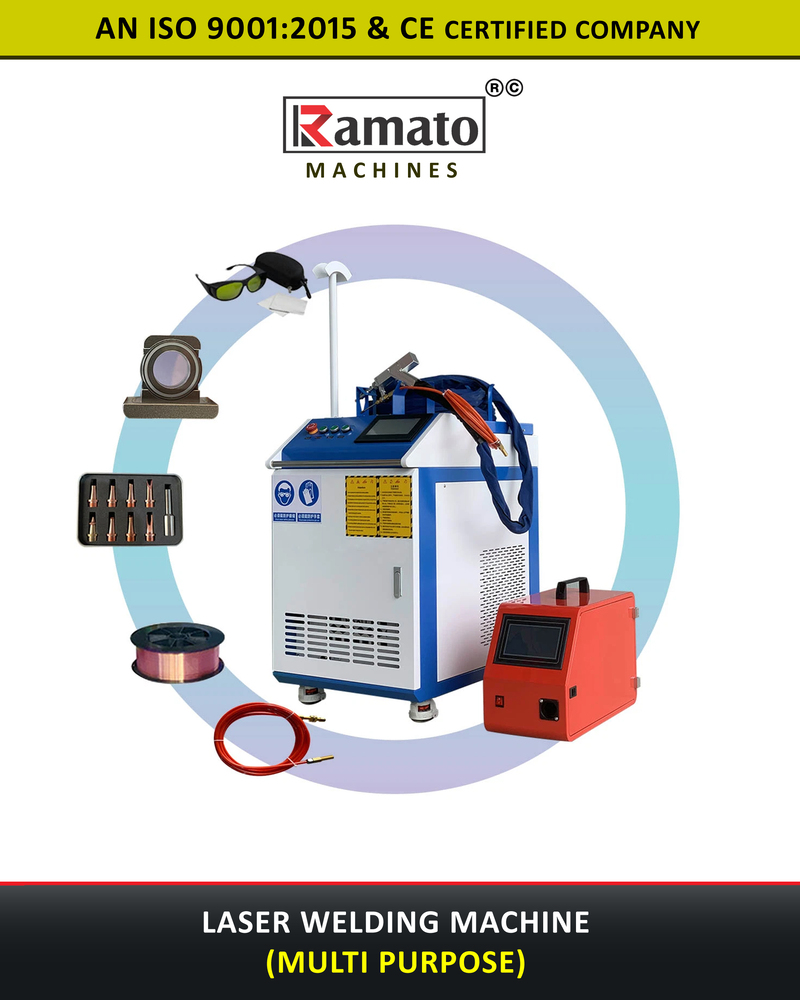
A Ramato Brand laser welding machine is a cutting-edge tool that utilizes laser technology to join materials together. It works by focusing a concentrated beam of light onto the desired welding area, which generates intense heat, causing the materials to melt and fuse together.
Types of Laser Welding: There are several methods of laser welding, including:
Conduction Mode Welding: In this mode, the laser beam heats the material surface, causing it to melt and form a weld pool. This mode is suitable for welding thin materials and producing shallow welds.
Keyhole Mode Welding: In this mode, the laser beam creates a deep, narrow channel or “keyhole” in the material. The intense heat vaporizes the material, creating a void that quickly fills with molten metal, resulting in deep penetration welds.
Pulsed Laser Welding: In pulsed laser welding, the laser beam is delivered in short pulses, allowing for precise control of heat input and minimizing thermal distortion.
A laser welding machine is a cutting-edge tool that utilizes laser technology to join materials together. It works by focusing a concentrated beam of light onto the desired welding area, which generates intense heat, causing the materials to melt and fuse together. Here’s a brief description highlighting its key features and advantages:
Precision Welding: Laser welding machines offer unparalleled precision, allowing for fine control over the welding process. The focused laser beam ensures pinpoint accuracy, resulting in high-quality welds with minimal distortion.
Versatility: These machines are capable of welding a wide range of materials, including metals, plastics, ceramics, and even dissimilar materials. They are used across various industries for welding intricate components with different thicknesses and geometries.
High Speed: Laser welding machines enable fast welding speeds, making them ideal for high-volume production environments. Their rapid processing capabilities contribute to increased productivity and reduced manufacturing lead times.
Minimal Heat Affected Zone (HAZ): Compared to traditional welding methods, laser welding produces a smaller heat-affected zone, which minimizes the risk of distortion, warping, and material damage. This is especially beneficial for welding heat-sensitive materials.
Non-contact Welding: Laser welding is a non-contact process, meaning there is no physical contact between the welding tool and the workpiece. This reduces the risk of contamination and damage to delicate materials, making it suitable for precision welding applications.
Automation Compatibility: Laser welding machines can be integrated with automation systems, such as robotic arms and CNC (Computer Numerical Control) machines, for seamless operation in production lines. This enhances efficiency and repeatability in manufacturing processes.
Clean and Environmentally Friendly: Laser welding produces minimal spatter, fumes, and waste, resulting in clean and environmentally friendly welding operations. This makes it suitable for use in industries with strict environmental regulations.
Remote Operation: Some laser welding machines offer remote operation capabilities, allowing operators to control the welding process from a distance. This enhances safety and flexibility in hazardous or hard-to-reach welding environments.
Low Maintenance: Laser welding machines are known for their reliability and low maintenance requirements. With proper upkeep and periodic servicing, they can provide years of trouble-free operation, reducing downtime and operating costs.
Wide Range of Applications: From automotive and aerospace manufacturing to electronics, medical devices, and jewelry production, laser welding machines find applications in various industries where precision, speed, and quality are paramount. They are used for welding components, assemblies, and intricate parts with exceptional accuracy and repeatability.
Laser welding machines are utilized across a diverse range of industries for their precision, efficiency, and versatility. Here are some common applications and industries where laser welding machines are used:
Automotive Industry: Laser welding machines are extensively used in the automotive sector for welding components such as body panels, exhaust systems, fuel tanks, transmission parts, and engine components. They offer precise and high-speed welding capabilities, contributing to the production of lightweight and durable vehicles.
Aerospace Industry: In the aerospace sector, where stringent quality standards and lightweight materials are essential, laser welding machines are used for welding aircraft components such as fuselage panels, wing structures, engine parts, and landing gear components. They provide precise and reliable welds with minimal distortion, ensuring the structural integrity of aircraft.
Medical Device Manufacturing: Laser welding machines play a crucial role in the manufacturing of medical devices and equipment such as surgical instruments, implants, catheters, and prosthetics. They enable precise and clean welding of small and delicate components, meeting the stringent requirements of the medical industry for biocompatibility and sterility.
Electronics Industry: Laser welding machines are used in the electronics industry for welding microelectronic components, semiconductor devices, sensors, connectors, and circuit boards. They offer precise and localized heating, making them suitable for welding small and delicate electronic components without causing damage or distortion.
Tool and Die Manufacturing: In the tool and die manufacturing sector, laser welding machines are used for repairing and modifying molds, dies, and tooling components. They provide precise and controlled welding, allowing for the repair of intricate features and fine details without affecting the overall geometry or performance of the tool.
Jewelry Production: Laser welding machines are widely used in the jewelry industry for welding precious metals such as gold, silver, platinum, and palladium. They enable precise and clean welding of delicate jewelry components, such as prongs, settings, and clasps, without discoloration or deformation.
Metalworking and Fabrication: Laser welding machines find applications in general metalworking and fabrication industries for welding a wide range of metal components, assemblies, and structures. They are used for welding stainless steel, aluminum, titanium, copper, and other alloys in various applications such as architectural, automotive, and industrial fabrication.
Microelectronics and Microtechnology: Laser welding machines are employed in the microelectronics and microtechnology industries for welding microscale components, sensors, and devices with high precision and accuracy. They enable fine-tuned control over the welding process, allowing for the assembly of complex microsystems and MEMS (Microelectromechanical Systems).
Dental Laboratories: Laser welding machines are used in dental laboratories for repairing and manufacturing dental prostheses, appliances, and orthodontic devices. They enable precise welding of dental alloys and materials, ensuring a perfect fit and aesthetic finish for dental restorations.
Plastics and Polymer Industry: Laser welding machines are utilized in the plastics and polymer industry for welding thermoplastic components and assemblies. They offer clean and precise welding without the need for additional consumables or adhesives, making them suitable for applications such as automotive parts, medical devices, and consumer products.
Features
A laser welding machine is a cutting-edge tool that utilizes laser technology to join materials together. It works by focusing a concentrated beam of light onto the desired welding area, which generates intense heat, causing the materials to melt and fuse together. Here’s a brief description highlighting its key features and advantages:
Precision Welding: Laser welding machines offer unparalleled precision, allowing for fine control over the welding process. The focused laser beam ensures pinpoint accuracy, resulting in high-quality welds with minimal distortion.
Versatility: These machines are capable of welding a wide range of materials, including metals, plastics, ceramics, and even dissimilar materials. They are used across various industries for welding intricate components with different thicknesses and geometries.
High Speed: Laser welding machines enable fast welding speeds, making them ideal for high-volume production environments. Their rapid processing capabilities contribute to increased productivity and reduced manufacturing lead times.
Minimal Heat Affected Zone (HAZ): Compared to traditional welding methods, laser welding produces a smaller heat-affected zone, which minimizes the risk of distortion, warping, and material damage. This is especially beneficial for welding heat-sensitive materials.
Non-contact Welding: Laser welding is a non-contact process, meaning there is no physical contact between the welding tool and the workpiece. This reduces the risk of contamination and damage to delicate materials, making it suitable for precision welding applications.
Automation Compatibility: Laser welding machines can be integrated with automation systems, such as robotic arms and CNC (Computer Numerical Control) machines, for seamless operation in production lines. This enhances efficiency and repeatability in manufacturing processes.
Clean and Environmentally Friendly: Laser welding produces minimal spatter, fumes, and waste, resulting in clean and environmentally friendly welding operations. This makes it suitable for use in industries with strict environmental regulations.
Remote Operation: Some laser welding machines offer remote operation capabilities, allowing operators to control the welding process from a distance. This enhances safety and flexibility in hazardous or hard-to-reach welding environments.
Low Maintenance: Laser welding machines are known for their reliability and low maintenance requirements. With proper upkeep and periodic servicing, they can provide years of trouble-free operation, reducing downtime and operating costs.
Wide Range of Applications: From automotive and aerospace manufacturing to electronics, medical devices, and jewelry production, laser welding machines find applications in various industries where precision, speed, and quality are paramount. They are used for welding components, assemblies, and intricate parts with exceptional accuracy and repeatability.
Applications
Laser welding machines are utilized across a diverse range of industries for their precision, efficiency, and versatility. Here are some common applications and industries where laser welding machines are used:
Automotive Industry: Laser welding machines are extensively used in the automotive sector for welding components such as body panels, exhaust systems, fuel tanks, transmission parts, and engine components. They offer precise and high-speed welding capabilities, contributing to the production of lightweight and durable vehicles.
Aerospace Industry: In the aerospace sector, where stringent quality standards and lightweight materials are essential, laser welding machines are used for welding aircraft components such as fuselage panels, wing structures, engine parts, and landing gear components. They provide precise and reliable welds with minimal distortion, ensuring the structural integrity of aircraft.
Medical Device Manufacturing: Laser welding machines play a crucial role in the manufacturing of medical devices and equipment such as surgical instruments, implants, catheters, and prosthetics. They enable precise and clean welding of small and delicate components, meeting the stringent requirements of the medical industry for biocompatibility and sterility.
Electronics Industry: Laser welding machines are used in the electronics industry for welding microelectronic components, semiconductor devices, sensors, connectors, and circuit boards. They offer precise and localized heating, making them suitable for welding small and delicate electronic components without causing damage or distortion.
Tool and Die Manufacturing: In the tool and die manufacturing sector, laser welding machines are used for repairing and modifying molds, dies, and tooling components. They provide precise and controlled welding, allowing for the repair of intricate features and fine details without affecting the overall geometry or performance of the tool.
Jewelry Production: Laser welding machines are widely used in the jewelry industry for welding precious metals such as gold, silver, platinum, and palladium. They enable precise and clean welding of delicate jewelry components, such as prongs, settings, and clasps, without discoloration or deformation.
Metalworking and Fabrication: Laser welding machines find applications in general metalworking and fabrication industries for welding a wide range of metal components, assemblies, and structures. They are used for welding stainless steel, aluminum, titanium, copper, and other alloys in various applications such as architectural, automotive, and industrial fabrication.
Microelectronics and Microtechnology: Laser welding machines are employed in the microelectronics and microtechnology industries for welding microscale components, sensors, and devices with high precision and accuracy. They enable fine-tuned control over the welding process, allowing for the assembly of complex microsystems and MEMS (Microelectromechanical Systems).
Dental Laboratories: Laser welding machines are used in dental laboratories for repairing and manufacturing dental prostheses, appliances, and orthodontic devices. They enable precise welding of dental alloys and materials, ensuring a perfect fit and aesthetic finish for dental restorations.
Plastics and Polymer Industry: Laser welding machines are utilized in the plastics and polymer industry for welding thermoplastic components and assemblies. They offer clean and precise welding without the need for additional consumables or adhesives, making them suitable for applications such as automotive parts, medical devices, and consumer products.